What Are UGC Ads? (+ How to Make Them with AI)

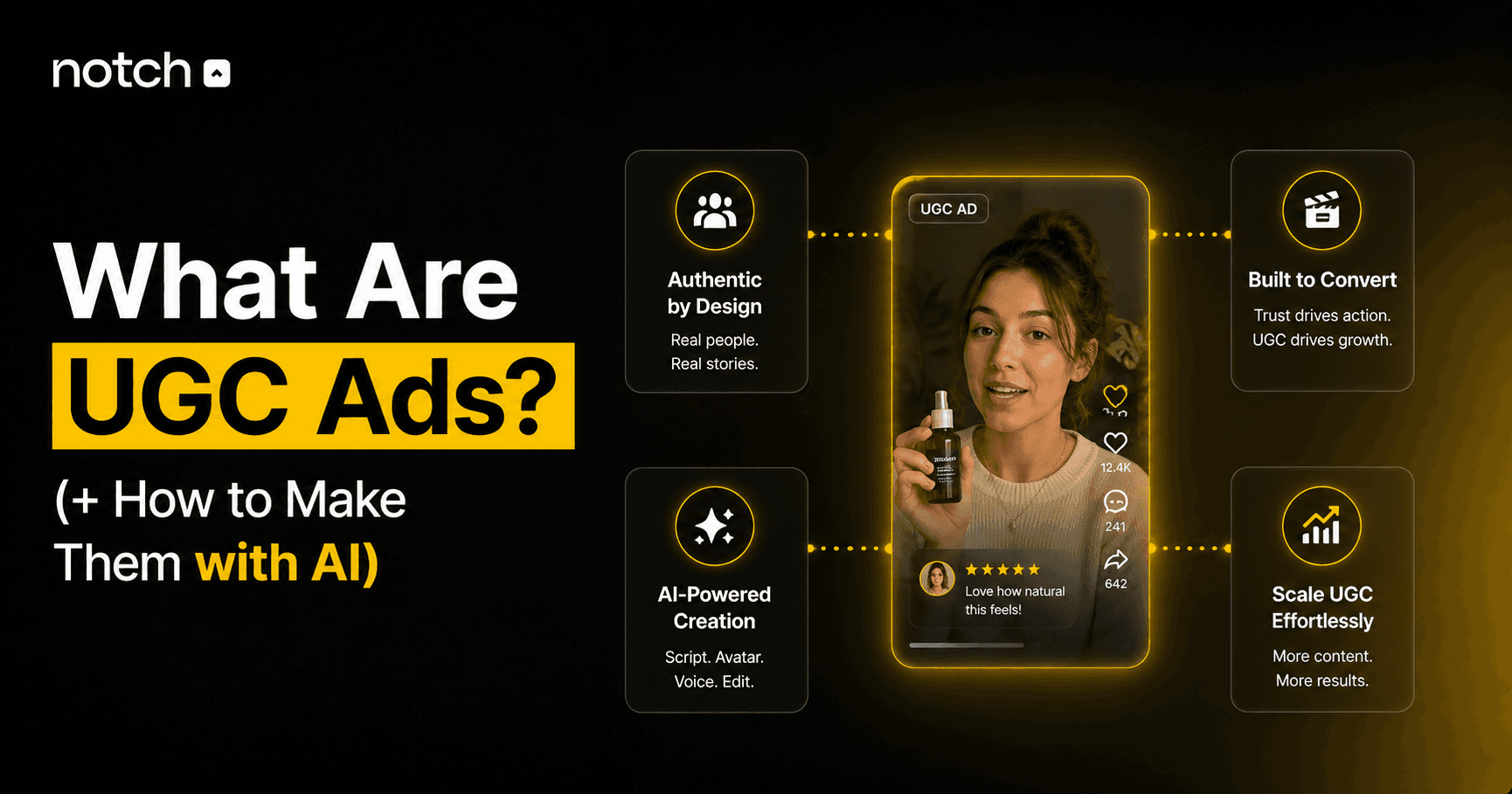
UGC ads are advertisements made to look like authentic user-generated content — a real person talking to camera about a product — rather than polished brand commercials. They convert because they feel like a recommendation, not an ad. And with AI, you can now produce them without recruiting a single creator.
What are UGC ads? UGC (user-generated content) ads are paid ads built in the style of organic content created by everyday users — typically casual, authentic, creator-style videos. They mimic the look and tone of real customer testimonials and social posts, which makes audiences trust them more than traditional, produced ads.
UGC ads are the dominant format on TikTok, Reels, and Shorts for a reason. But there's a lot of confusion about what counts as UGC, why it works, and how AI fits in. Let's clear it up.
What are UGC ads?
UGC ads are paid advertising creative designed to look organic — usually a single person speaking to their phone camera, unboxing, demoing, or reviewing a product in a casual, unpolished way. The format borrows the visual language of real social content so it blends into the feed instead of interrupting it. The goal is simple: feel like a friend's recommendation, not a billboard. For a hands-on walkthrough, see how to create AI UGC ads.
What's the difference between UGC ads and UGC-style ads?
The distinction matters more than it sounds:
UGC ads (true UGC): made by an actual creator or customer, then licensed and run as a paid ad.
UGC-style ads: produced by the brand (or an AI) to look like UGC, without an actual creator filming it.
Both run as ads; the difference is who produced the footage. True UGC means recruiting, briefing, paying, and waiting on creators. UGC-style ads — increasingly made with AI avatars — give you the same authentic look on demand, at the volume paid social actually requires.
Why do UGC ads outperform polished ads?
Three reasons, and they compound:
Trust. Audiences trust people over brands. A face and a casual voice read as honest in a way a glossy spot doesn't.
Native feel. UGC blends into organic feeds, so it interrupts less and gets watched longer — and watch time drives delivery.
Testability. Because UGC is cheap to vary, you can test dozens of hooks and angles — and as we cover in why volume matters in paid social, testing volume is the biggest driver of finding winners.
A few numbers that explain the format's dominance:
UGC-style ads frequently see meaningfully higher click-through and lower CPAs than studio-produced ads on social platforms.
Short-form, creator-style video is the highest-consumed format across TikTok, Reels, and Shorts.
The bottleneck for most brands isn't whether UGC works — it's producing enough of it.
How do you make UGC ads with AI (without creators)?
This is where the format gets unblocked. Instead of sourcing creators for every concept, you generate UGC-style ads with AI avatars that talk to camera, scripted in your brand's voice. The workflow:
Pick the angle — testimonial, problem/solution, unboxing, "things I wish I knew."
Generate the script in a casual, creator-native tone.
Choose an AI avatar as your presenter — consistent across every ad.
Add voiceover and B-roll automatically.
Produce variations — ten hooks for one offer, ready to test.
An agentic platform like Notch does all five from a single direction, with your brand pre-loaded — so you're directing UGC ads into existence rather than managing a creator pipeline. This is exactly how dropshippers scale ad output with less effort.
What are good examples of UGC ads?
The formats that reliably work:
The testimonial: "I was skeptical, but..." — a person sharing a genuine-feeling result.
Problem/solution: name a frustration, then reveal the product as the fix.
Unboxing / first impressions: the tactile, in-the-moment reaction.
"Things I wish I knew": listicle-style advice that soft-sells.
Day-in-the-life: the product woven into a routine.
Each of these can be produced as a UGC-style ad with AI, then varied by hook and presenter to find what converts — perfect for e-commerce and dropshipping brands that need constant fresh creative.
Frequently asked questions
What does UGC mean in advertising?
UGC stands for user-generated content. In advertising, it refers to ads made in the style of authentic, creator-shot content — casual videos of real-seeming people using or reviewing a product — which audiences trust more than polished brand ads.
Are UGC ads better than traditional ads?
For social platforms, usually yes. UGC-style ads feel native, build trust faster, and are cheap to test in volume — all of which the platforms' delivery algorithms reward. Traditional polished ads still have their place, but UGC dominates paid social.
Can you make UGC ads without hiring creators?
Yes. AI avatars and agentic ad platforms let you produce UGC-style ads — with a presenter, script, voiceover, and edit — without recruiting or paying creators, and at far higher volume.
How do I create UGC ads with AI?
Choose an angle, generate a creator-style script, pick an AI avatar, and produce several hook variations to test. Create your first AI UGC ads with Notch.
Skip the creator hunt. Generate authentic UGC-style ads on demand with Notch.
Keep reading