How Cinematic Ads Use Storytelling to Boost Brand Engagement
Nov 28, 2025
The “SHOP NOW” interruption ad is dead.
Scroll through Meta or TikTok in 2025 and you’ll notice something: the ads that actually make you stop aren’t screaming at you to buy. They’re telling stories.
Brands like Uber, Gucci, and United Airlines aren’t running 6-second product pitches anymore. They’re dropping 60–90 second cinematic short films—complete with characters, emotional arcs, and production value that rivals indie features. And the shift is real: cinematic ads achieve 3× higher engagement compared to typical corporate spots.
But here’s the nuance almost every marketer misses:
The best cinematic ads aren’t just pretty films. They’re engineered for conversions—with direct response (DR) logic baked under the surface.
Why Cinematic Storytelling Works (When Direct Response Fails)
The Brain Science Behind It
Traditional DR ads trigger the reptilian brain:
Buy now.
Limited time.
Click here.
Cinematic storytelling activates the neocortex via neural coupling, where the viewer’s brain mirrors the storyteller’s emotions. Research shows your brain syncs with the story you watch.
This is why 75% of moviegoers stay fully engaged with brand messages in cinema environments.
The Post-Purchase Difference No One Talks About
Fear-driven DR ads can boost site visits 49% above average.
But joy-driven storytelling yields a 7% higher conversion rate and higher post-purchase satisfaction.
Cinematic Ads vs. Traditional Product Ads
Metric | Cinematic Storytelling Ads | Traditional Product Ads |
Engagement Rate | 3× higher | Baseline |
Attention Capture | 75% | 15–25% |
Conversion Uplift | +34% | Baseline |
Post-Purchase Satisfaction | Higher | Lower |
Brand Recall (30 days) | 2× higher | Baseline |
The 5 Storytelling Techniques That Drive Engagement
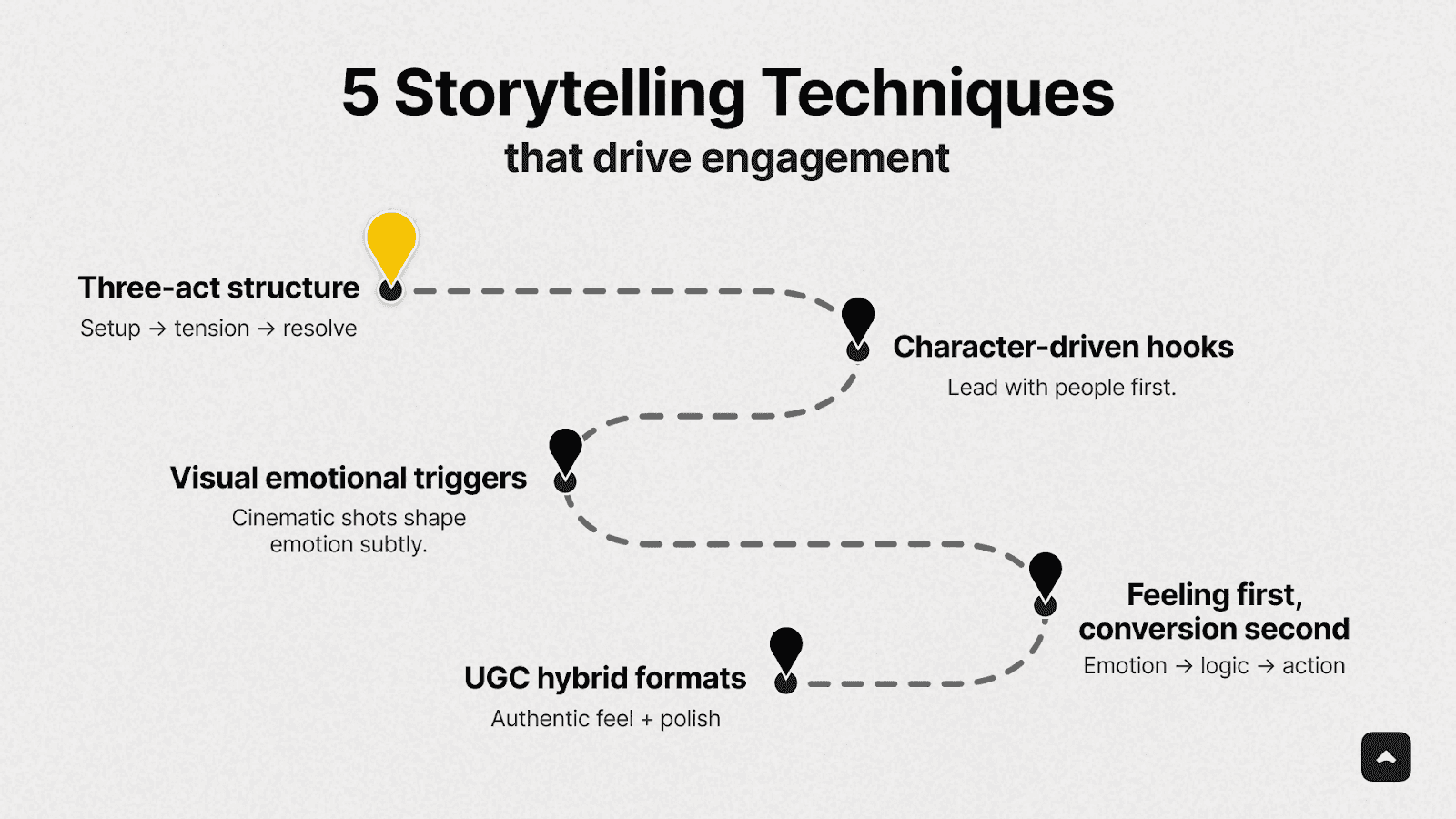
1. Three-Act Structure (Compressed for Ads)
Cinema: setup → tension → resolution.
Cinematic ads compress:
Act 1: World + character
Act 2: Emotion + tension
Act 3: Resolution + product
2. Character-Driven Hooks (Not Product-First)
People engage with people, not products.
Cinematic ads lead with character—not a sales pitch.
3. Visual Emotion Triggers (Camera, Color, Pacing)
Filmmaking grammar = conversion triggers:
Slow push-ins → trust
Warm tones → nostalgia
Cool tones → innovation
Fast cuts → youth & energy
Lingering shots → luxury
4. Feeling-First, Conversion-Second
As noted in cinematic ad conversion principles:
First emotion → then logic → then action.
5. UGC Hybrid Formats (Authentic + Cinematic)
UGC + cinematic B-roll → Authenticity × polish = 3× more shares.
The Hybrid Model: Cinema on the Surface, DR Underneath
Cinematic Craft + Direct Response Structure
Cinematic ads that convert follow:
Cinematic visuals
Character arcs
Emotional beats
Layered on top of:
Proven DR hooks
Problem → agitation → solution
CTA timing + placement
Why Typical AI Video Tools Fail
Dimension | Notch | Typical AI Generator |
DR structure | ✅ Yes | ❌ No |
Cinematic quality | ✅ High | ✅ Medium–High |
Performance intelligence | ✅ Yes | ❌ No |
Format variety | 12+ | 2–4 |
Iteration engine | Successor AI | Manual |
Explore: Cinematic Shorts Engine
How to Embed DR Logic Inside Cinematic Ads
The Performance Blueprint
Start with conversion goal
Pick emotional trigger
Follow DR arc:
Hook (0–3s)
Problem (3–15s)
Agitation (15–30s)
Solution (30–45s)
CTA (45–60s)
Layer cinematic craft
Test + iterate
How to Create Cinematic Ads That Actually Convert
Step 1: Start With Emotional Resonance
Before → After emotional state = the story arc.
Step 2: Match Format to Funnel Stage
Format | Funnel | Best Use Case |
Cinematic Trailer | ToFU | Awareness |
UGC Hybrid | MoFU | Social proof |
Founder Narrative | MoFU → BoFU | Trust |
Product Motion Shots | BoFU | Feature depth |
Transformation Story | BoFU | Tangible proof |
Try: URL → Ads
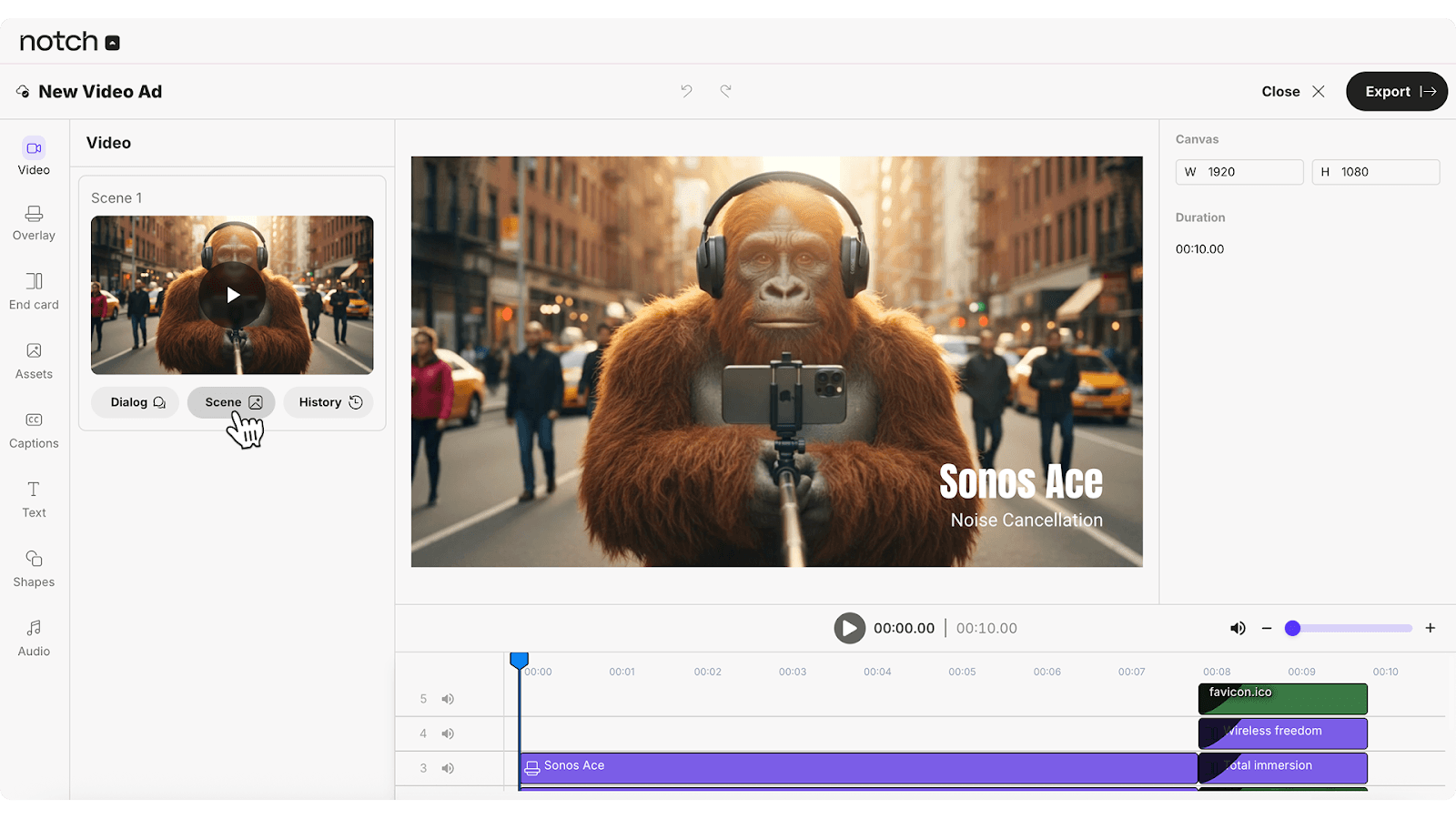
Step 3: Use Notch to Produce Without a Film Crew
Drop URL → Creative Brain extracts assets
Choose cinematic format
Customize scenes (camera, lighting, avatar)
Generate & export
Step 4: Use Data to Iterate
Top performers test:
3–5 hooks
2–3 emotional arcs
2–3 CTAs
Then iterate with: Successor AI
Common Mistakes (and How to Avoid Them)
Mistake | Why It Hurts | Fix |
Slow start | Drops watch-through | Front-load emotion |
Too artistic | Low recall | Brand reveal by :30 |
Story ≠ conversion | No alignment | Build story around CTA |
One format only | Wrong for funnel | Test formats |
Same pacing across platforms | Poor performance | Adjust for Meta/TikTok/YouTube |
Key Takeaways
Cinematic storytelling = higher engagement + higher conversions
Hybrid model wins → cinema up top, DR underneath
Emotional arc + DR structure = performance
Match cinematic format to funnel
Iterate weekly using data
Related Resources
Keep reading