AI UGC Ads Explained: How Brands Create UGC That Feels Human


Written by Vinay Jain · Updated May 2026 · 9 min read
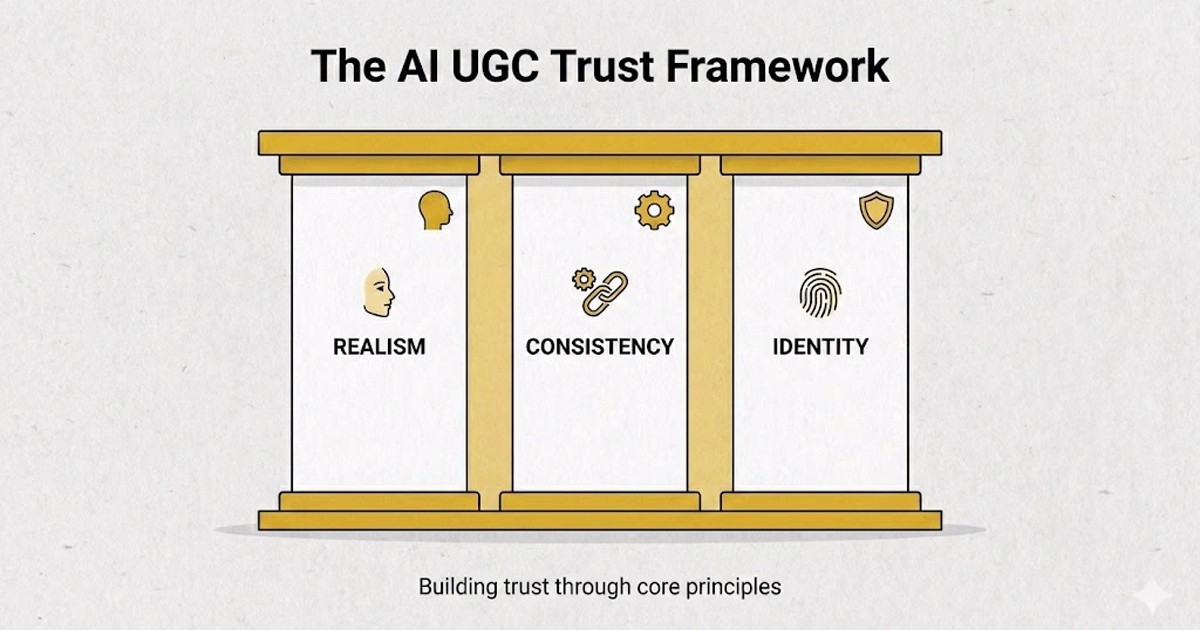
TLDR
Most AI UGC ads fail because they optimize for speed, not realism. High-performing brands treat UGC style ads as a trust system, not a content format.
This guide breaks down how to create UGC video ads that feel human, consistent, and scalable using advanced AI workflows, while avoiding the common mistakes that make user-generated ads look fake and generic.
INTRODUCTION
AI UGC ads are exploding across Meta, TikTok, and YouTube Shorts.
Every brand is testing them. Every feed is full of them.
Yet very few UGC ads actually convert.
The reason is simple: most teams confuse UGC style with UGC trust.
They generate fast content, but miss the psychological signals that make user-generated ads feel believable.
This article breaks down how high-performing brands create UGC video ads that outperform 99 percent of competitors by focusing on realism, consistency, and delivery instead of just automation.
What AI UGC Ads Actually Are (And What They Are Not)
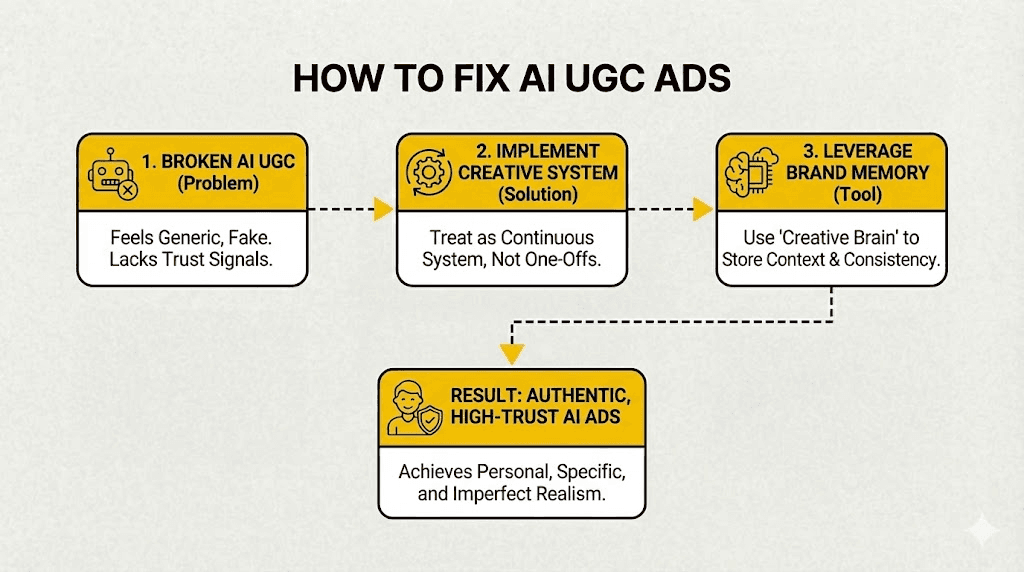
What Makes AI UGC Ads Different From Traditional UGC Ads
At their core, AI UGC ads are designed to simulate creator-led recommendations without relying on real creators.
But here’s the critical distinction most marketers miss:
Traditional UGC ads succeed because of trust transfer.
Most AI-generated UGC style ads fail because they only copy the format, not the trust signals.
Real user-generated ads work because they feel:
Personal
Specific
Slightly imperfect
Consistent over time
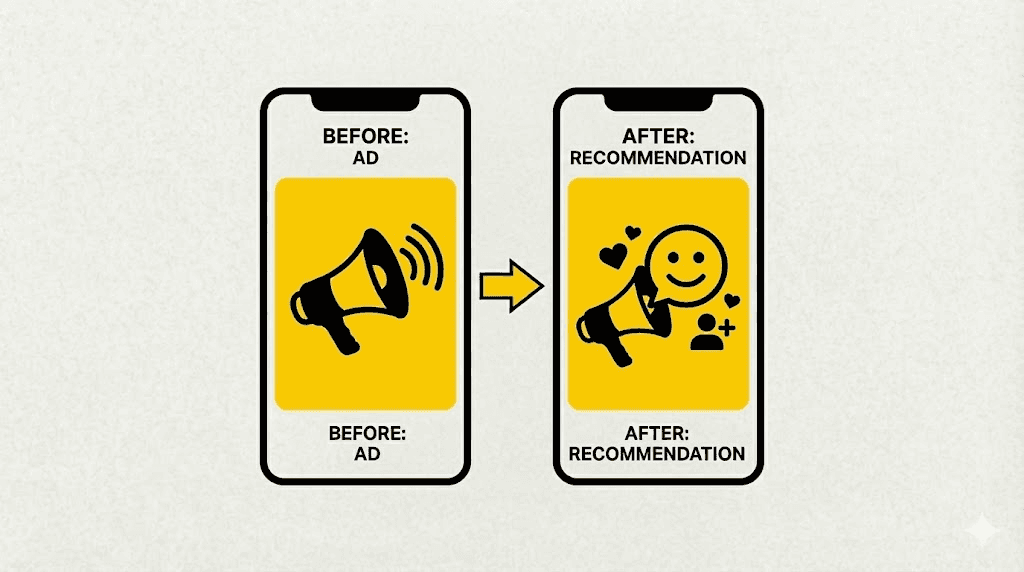
AI UGC fails when it looks like “content” instead of “recommendation”. AI UGC fails when the generated video feels like AI Slop, recommending a product. And the current sentiment around AI-generated content is really bad.
So, as a brand, you need to be careful while creating AI UGC ads.
It puts the brand in a position where it directly creates a wrong perception.
This is also why AI UGC must be treated as part of a creative system, not a one-off asset.
Platforms that store brand memory and creative context, like the Creative Brain, make this possible by preventing each ad from starting at zero.
Why Most UGC Style Ads Fail in Performance Campaigns
The Real Performance Killers in AI UGC Ads
Most underperforming UGC video ads fail for predictable reasons:
1. Generic actors
When the same faces appear across dozens of brands, audiences subconsciously disengage.
2. Scripted delivery
Overly clean scripts destroy the illusion of authenticity that UGC ads rely on.
3. Inconsistent identity
Switching faces across variations breaks trust faster than poor copy.
4. No refresh strategy
Even strong user-generated ads decay over time due to creative fatigue. This is why pairing UGC with a creative refresh system becomes essential as spend scales.
These issues compound when teams generate AI UGC in isolation instead of integrating it with broader ad generation workflows and performance feedback loops.
Method 1 - Creating Custom AI Influencers That Feel Human, Not Synthetic
Why Custom AI Influencers Are the Foundation of High-Performing AI UGC Ads
Most AI UGC ads fail before the message even lands.
Not because the script is weak.
Not because the product is wrong.
They fail because the person delivering the message feels generic.
In UGC style ads, the actor is the ad. Viewers do not evaluate claims first. They evaluate whether they trust the person speaking.
In internal audits across multiple UGC ad tests, ads using custom-defined actors consistently outperformed generic actors on thumb-stop rate and early watch time.
This happens because specificity signals intention.
Generic faces signal automation.
Defining a Custom AI Influencer From Scratch
High-performing ugc video ads start by defining the influencer before writing a single line of copy.
This means deciding:
Who this person is
Who they are not
Why would this person realistically talk about this product
When user-generated ads feel like they could only belong to one brand, trust rises immediately.
Pro Tip :
Ads where actor demographics closely matched the target audience showed higher average watch duration,
even when scripts remained unchanged.
Audience alignment is not aesthetic. It is behavioral.
Making Product Interaction Look Incidental, Not Staged
One of the fastest ways to break realism in a ugc ad is unnatural product handling.
Real creators do not “present” products. They reference them mid-thought, half-focused, often casually.
High-performing AI UGC ads replicate this by:
Introducing the product mid-sentence
Letting the product appear briefly, not centrally
Treating it as context, not centerpiece
Pro Tip :
UGC ads that introduced the product conversationally outperformed product-first variants in engagement depth.
Believability beats clarity in early-stage performance.
Scaling Variations Without Breaking Identity
A common mistake in ugc style ads is changing the actor with every variation.
That resets trust every time.
High-performing AI UGC ads keep the influencer constant while varying:
Hook framing
Environment
Angle
CTA softness
This allows learning without sacrificing recognition.
Pro Tip :
Ads that preserved actor identity across variations maintained stronger engagement consistency than ads that rotated actors aggressively.
Trust compounds. Recognition accelerates it.
Voice Realism Matters More Than Visual Realism
Viewers forgive visual imperfections in ugc video ads.
They do not forgive unnatural speech.
Human delivery includes:
Uneven pacing
Minor pauses
Incomplete sentences
Emotional continuity
Pro Tip :
Voice delivery with slight pacing irregularities outperformed perfectly timed narration in conversational UGC ads.
Perfect speech sounds artificial. Imperfect speech sounds human.
Method 2 - Why Conversational Delivery Beats Scripted UGC Ads
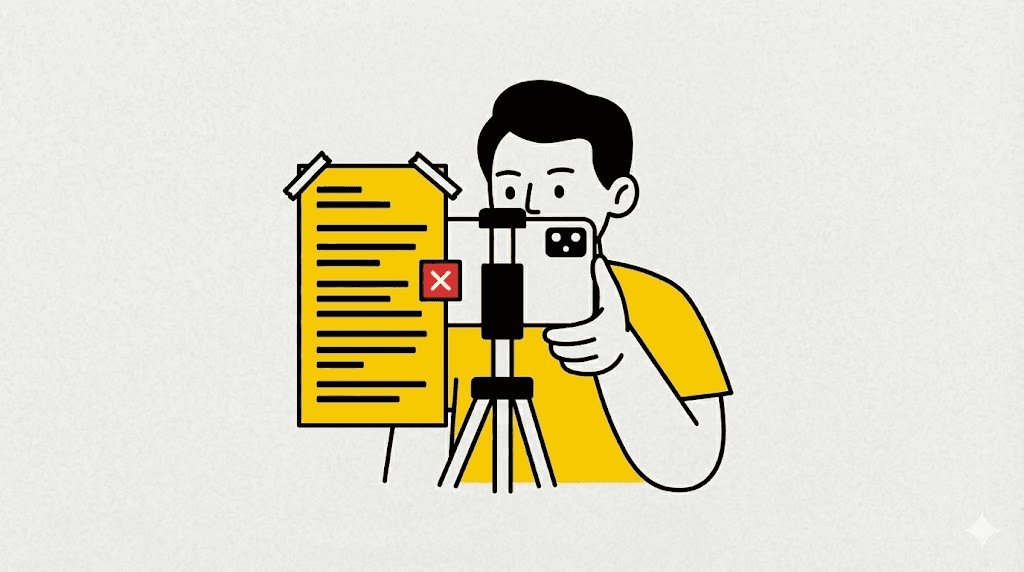
The Hidden Reason Most UGC Video Ads Feel Fake
Most underperforming AI UGC ads fail at the same moment.
The first sentence.
Not because it is unclear, but because it sounds written.
UGC ads are not evaluated like ads.
They are evaluated like conversations.
The moment speech feels rehearsed, trust drops.
Pro Tip -
Conversationally phrased openings held attention longer than polished scripts across early hook testing.
Good copywriting instincts often hurt user-generated ads.
Scripted Language Breaks the Illusion of User Generated Ads
Traditional ad copy aims for persuasion.
UGC style ads aim for plausibility.
High-performing delivery sounds like:
Thinking out loud
Discovering the point mid-sentence
Talking with the viewer, not at them
Low-performing ugc video ads sound like:
Brand statements
Value propositions
Cleanly structured arguments
Pro Tip -
UGC ads with fragmented sentence structures outperformed fully scripted delivery in early retention.
Trust lives in imperfection.
Tone Matching Is a Performance Lever, Not a Creative Preference
Realism is contextual.
Different audiences trust different conversational cues:
Younger audiences respond to faster, informal delivery
Older audiences prefer slower, reflective pacing
Professional niches trust calm confidence over enthusiasm
Tone mismatches caused sharper early drop-offs than visual mismatches during UGC ad testing.
This is why realism cannot be generic.
Casual Delivery Still Requires Structure
Casual does not mean chaotic.
High-performing AI UGC ads still follow a simple structure:
One clear hook
One core idea
One soft CTA
Stacking points kills conversational flow.
Single-idea UGC ads outperformed multi-point scripts in completion rate.
Conversations rarely persuade with lists.
Avoiding AI Slop While Staying Real
Chasing realism without control creates AI slop.
AI slop shows up as:
Incoherent phrasing
Emotional inconsistency
Random tonal shifts
High-performing ugc style ads stay within a narrow realism band:
Natural but understandable
Casual but intentional
Relaxed but on-brand
Branding Without Breaking Realism
Realistic user generated ads still carry brand memory.
This shows up subtly through:
Consistent color usage
Familiar visual accents
Repeated framing styles
Viewers may not notice this consciously, but recall improves.
UGC ads that preserved brand color consistency showed higher recall than visually inconsistent variants, even when delivery remained casual.
Branding works best when it whispers.
Method 3 - Scaling AI UGC Ads Without Breaking Trust or Brand Consistency
Why Most Scaled UGC Ads Collapse After Initial Success
Many AI UGC ads perform well at a small scale and then quietly stop working.
Not because the message changed.
Not because the product failed.
They collapse because trust does not scale automatically.
In UGC style ads, viewers build familiarity with:
The face
The delivery style
The visual rhythm
When those elements change too aggressively, each new ugc ad has to earn trust from zero.
In multi-variant testing, UGC ads that introduced too many changes at once showed sharper performance decay than ads that evolved gradually.
Scaling is not about producing more content.
It is about preserving recognition while learning.
Consistency Is the Hidden Performance Multiplier in UGC Video Ads
Real user-generated ads are effective because the same creator appears repeatedly.
Audiences do not need to re-evaluate credibility each time.
High-performing ugc video ads replicate this by keeping:
The same actor
The same vocal tone
A familiar framing style
Variation should happen around identity, not instead of identity.
UGC ads that maintained consistent actor identity across creative refresh cycles sustained higher engagement stability over time.
Trust compounds through repetition.
What to Change and What to Lock in UGC Style Ads
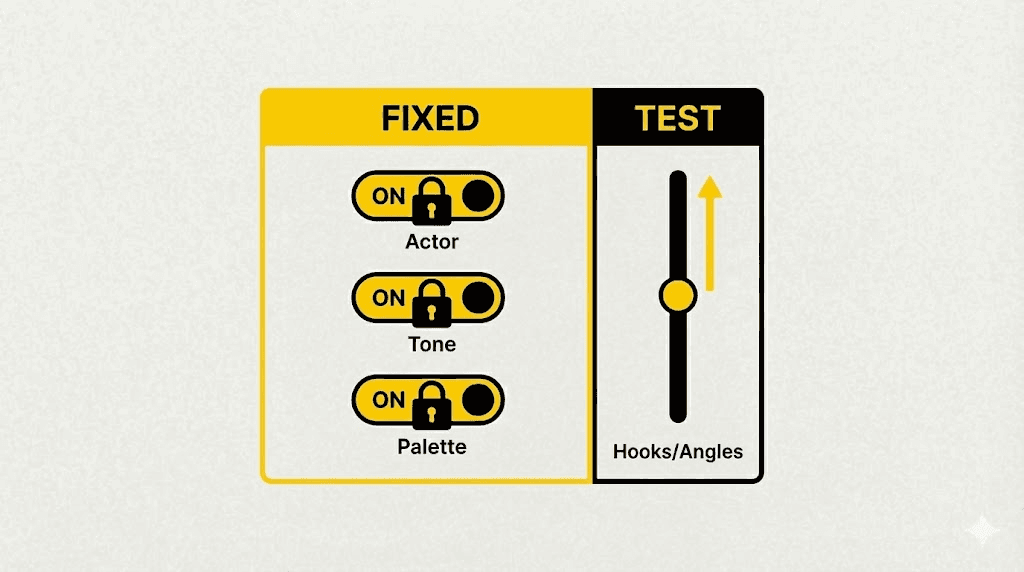
When scaling AI UGC ads, everything should not be variable.
Elements to lock:
Actor identity
Core tone
Visual color palette
Framing style
Elements to test:
Opening hook
Angle of the message
Context or environment
CTA softness
This mirrors how real creators evolve content without losing audience trust.
UGC ad variations that locked identity but rotated hooks outperformed variations that changed both simultaneously.
Learning requires stability.
Why Over-Rotation Creates Performance Noise
Many teams over-rotate in the name of testing.
They change:
Actor
Script
Setting
Visual style
Tone
All at once.
The result is noise, not insight.
In UGC-style ads, viewers need at least one constant to anchor their trust.
Excessive creative rotation reduced signal clarity during performance analysis, slowing optimization decisions.
Fewer variables produce better learning.
Scaling Without Turning UGC Ads Into Templates
There is a fine line between consistency and templating.
When AI UGC ads become too rigid, they lose the spontaneity that makes user generated ads effective.
High-performing teams avoid this by:
Keeping delivery loose
Allowing phrasing variation
Preserving natural imperfections
Consistency should feel familiar, not mechanical.
Brand Presence Without Breaking UGC Realism
The best ugc video ads do not look branded.
They feel familiar.
This happens through:
Repeated color cues
Subtle background consistency
Similar framing choices
Stable visual rhythm
Data hook:
UGC ads that preserved subtle brand visual cues showed higher recall without negatively impacting perceived authenticity.
Brand memory does not require logos.
It requires repetition.
When to Refresh and When to Let UGC Ads Run
Not every performance dip requires a reset.
In AI UGC ads, small creative changes often outperform full replacements.
Refresh signals include:
Slower hook retention
Stable CTR but declining conversion
Audience saturation, not message failure
Data hook:
Incremental creative refreshes preserved trust better than full creative swaps during mid-cycle performance declines.
Evolution beats reinvention.
Common AI UGC Mistakes That Kill Performance
Most AI UGC ads do not fail because AI is bad.
They fail because teams repeat the same mistakes at scale.
Mistake 1: Confusing realism with randomness
Adding noise, filler, or awkward phrasing does not make UGC style ads feel human. It makes them feel careless.
Mistake 2: Over-branding too early
Logos, heavy brand colors, and value props in the first seconds instantly break the illusion of user generated ads.
Mistake 3: Rotating actors too aggressively
Every new face resets trust. UGC video ads need recognition before persuasion.
Mistake 4: Writing like an ad, not a thought
Perfect scripts kill conversational flow. UGC ads should sound discovered, not delivered.
Mistake 5: Treating AI UGC as disposable content
When ads are generated without a refresh or evolution strategy, fatigue accelerates instead of slowing.
When AI UGC Ads Outperform Human-Created UGC
AI does not replace creators.
It replaces bottlenecks.
AI UGC ads outperform human UGC when:
Speed of iteration matters more than emotional depth
You need to test many angles quickly
Budgets cannot support creator churn
Creative fatigue requires frequent refreshes
Early-stage validation is the goal
Human-created UGC still wins when:
Deep emotional storytelling is required
Long-term creator trust is already established
Brand narratives rely on lived experience
The strongest brands use both.
They treat AI-generated UGC ads as a performance engine, and human creators as brand builders.
That balance preserves trust while unlocking scale.
FAQs
What are AI UGC ads?
AI UGC ads are ads designed to replicate the look, feel, and delivery of creator-led content using AI-generated actors and voices, without relying on real creators.
Do AI UGC ads actually convert?
Yes, when realism, consistency, and conversational delivery are prioritized. Poorly executed ugc video ads fail due to lack of trust, not because of AI itself.
How realistic do AI UGC ads need to be?
Realistic enough that viewers stop questioning authenticity. Perfect realism is not required. Believability is.
Are AI UGC ads brand safe?
They can be, if tone, delivery, and visual identity remain controlled and consistent. Most risk comes from over-randomization.
Can AI replace creators for UGC ads?
No. AI replaces speed constraints, not human storytelling. The best strategies combine AI UGC with human creators.
AI UGC Ads Win When They Respect Human Psychology
The brands winning with AI UGC ads are not chasing automation.
They are chasing believability.
They understand that:
Trust scales through consistency
Realism beats polish
Familiarity beats novelty
Evolution beats reinvention
When ugc style ads feel human, on-brand, and intentional, audiences stop seeing them as ads.
They see them as recommendations.
That is where performance compounds.
Keep reading