The New Creative Org Chart for Performance Agencies
Jan 21, 2026

The New Creative Org Chart for Performance Agencies
TL;DR
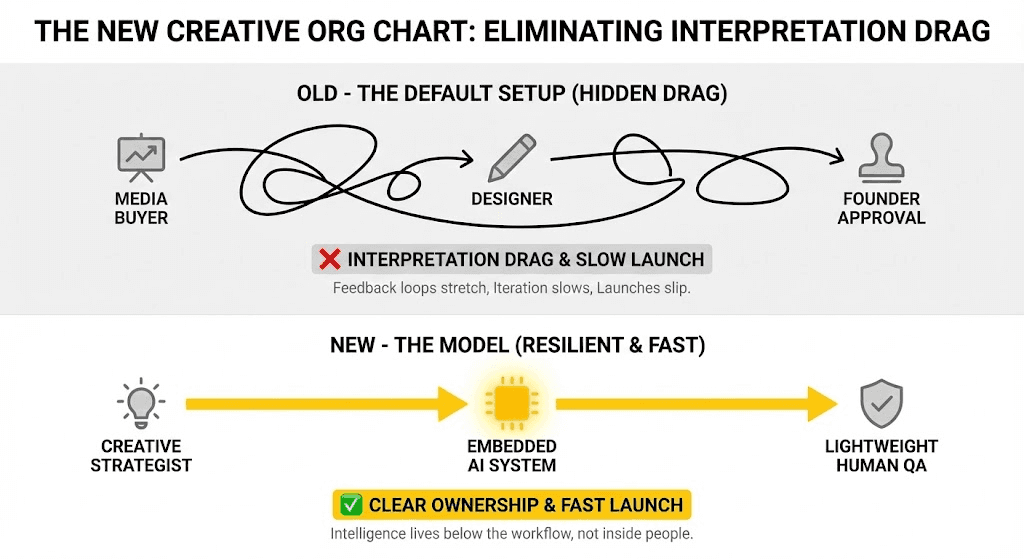
Old agencies scale people
New agencies scale decision flow
Creative velocity is an org design outcome
If your founder is still approving ads, your org chart is outdated.
The Old Creative Org Chart (Where Agencies Get Stuck)
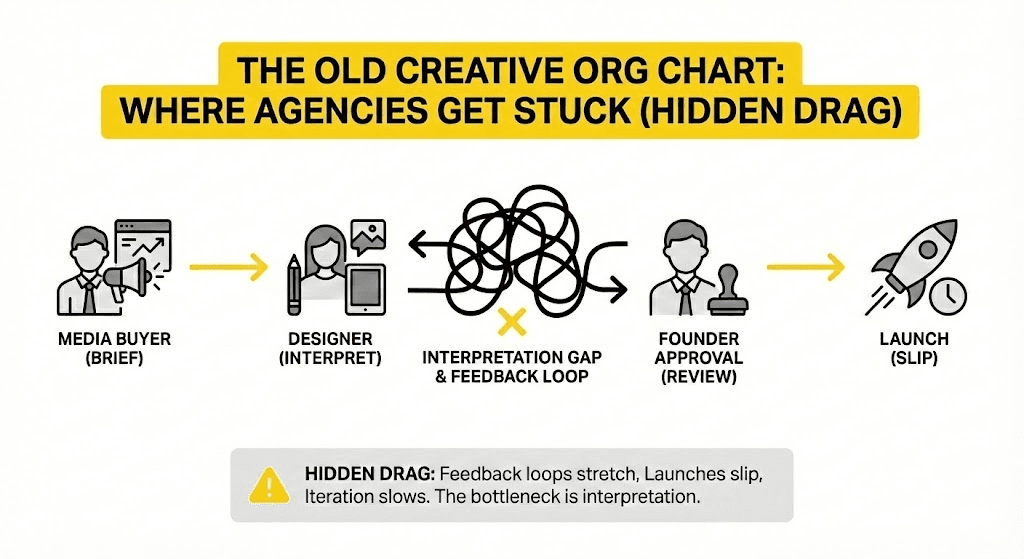
The default setup most agencies still run:
Media Buyer → Designer → Founder Approval → Launch
On paper, this looks reasonable.
In reality, it creates hidden drag everywhere.
What actually happens
Media buyers brief on what they think will work
Designers interpret brand, tone, and intent
Founders review because the quality risk is high
Feedback loops stretch
Launches slip
Iteration slows exactly when spending increases
The bottleneck is not effort.
It is an interpretation.
Why This Org Chart Breaks at Scale
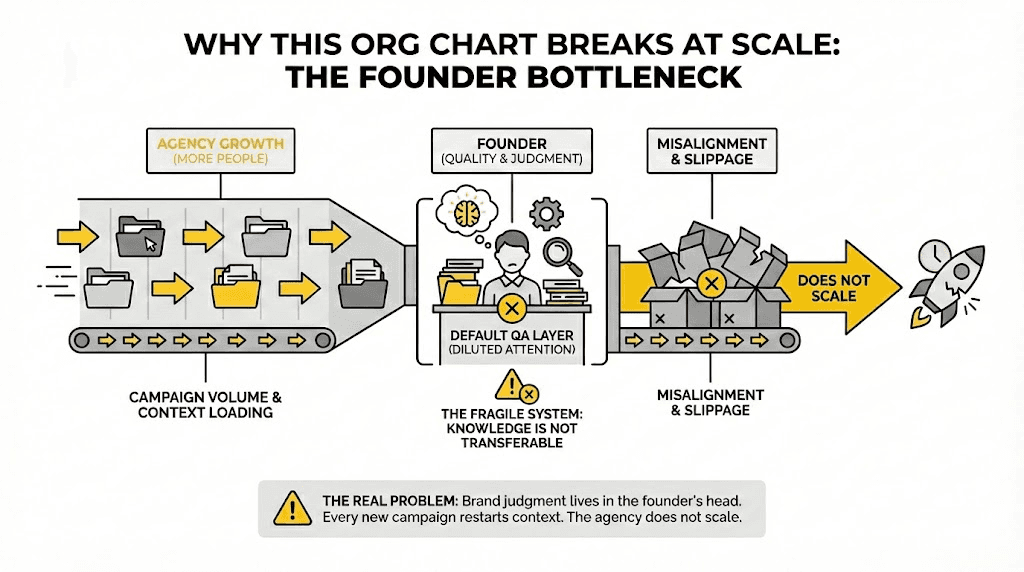
This structure fails predictably as agencies grow.
Not because teams are bad.
Because the system is fragile.
The real problems
Creative quality lives in the founder’s head
Brand judgment is never fully transferable
Every new campaign restarts context loading
More people means more misalignment
Founders become the default QA layer
The agency does not scale.
The founder’s attention gets diluted.
The New Creative Org Chart High-Velocity Agencies Use
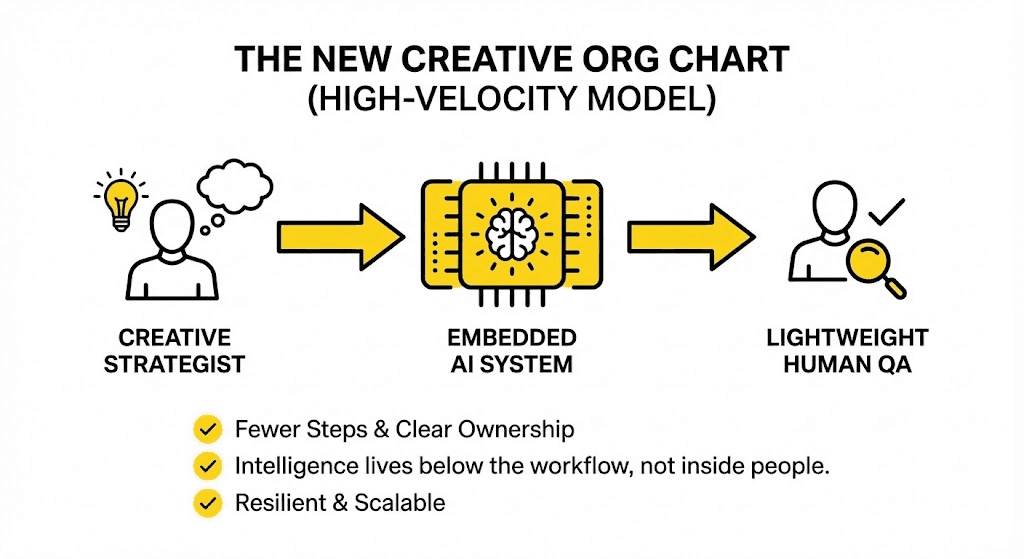
The new model is simpler and more resilient:
Creative Strategist → Embedded AI System → Lightweight Human QA
Fewer steps.
Clear ownership.
Intelligence resides below the workflow, not within individuals.
What Each Role Actually Does
This is where most agencies get confused, so clarity matters.
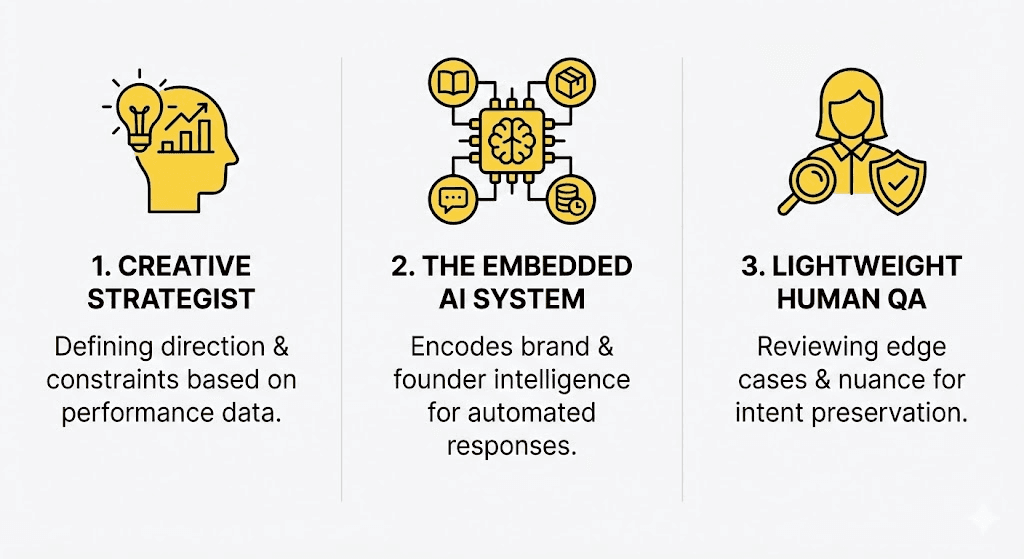
1. Creative Strategist
This role is neither a designer nor a media buyer.
They are responsible for:
Defining what to test and why
Translating performance data into creative direction
Setting constraints that matter
Deciding which ideas deserve scale
They do not produce assets.
Their output is direction, not files.
2. The Embedded AI System
This is not a prompt box and not a template library.
This system holds:
Brand rules
Product truth
Approved language
Historical winners and failures
The founder judgment is encoded once
When a new ad is needed, the system responds from this intelligence.
No re-briefing.
No rediscovery.
No guessing.
3. Lightweight Human QA
This role exists for edge cases, not routine work.
They:
Review outputs
Catch nuance
Ensure intent is preserved
Because the system already understands context, QA becomes faster and calmer.
Where Approvals Disappear
Approvals do not disappear because founders stop caring.
They disappear because risk disappears.
Risk drops when:
Brand logic is enforced automatically
Past mistakes are remembered
Winning patterns are reused
Output becomes predictable
Founders stop approving when they stop being surprised.
Where Velocity Compounds
Velocity compounds when:
Campaigns start from existing intelligence
Variations are generated instantly
Winners evolve instead of dying
Teams stop waiting on each other
This is how agencies ship more ads per week without adding headcount.
Not by working harder.
By restarting less.
Old Model vs New Model (Quick Snapshot)
Old Model (People-Dependent)
Every campaign starts from zero
Brand context lives in people’s heads
Execution depends on who’s available
The founder reviews most creatives
Speed increases linearly with effort
This model breaks when the moment scale is required.
New Model (System-Driven)
Brand and performance knowledge persists
Creative execution responds to embedded intelligence
Systems handle repetition, humans handle judgment
Founder exits the daily approval loop
Speed compounds as the system learns
This is not faster execution.
It’s fewer resets.
The Real Shift
This isn’t an AI upgrade.
It isn’t a tooling change.
It’s an org design shift where creative intelligence moves into the system, so every new ad starts informed, not guessed.
How This Changes Hiring Decisions Entirely
Hiring is not the enemy.
Hiring without systems is.
Hiring works when:
There is intelligence to plug into
Judgment is encoded, not rediscovered
New people amplify direction
Hiring fails when:
Context lives in heads
Quality depends on availability
Every new hire increases noise
People scale direction.
Systems scale execution.
What This Means for Performance Agencies Now
The agencies pulling ahead will:
Look smaller than they perform
Move faster than their headcount suggests
Feel calm even under scale
Not because they are more creative.
Because their org chart is built for leverage.
Final Thought
The new creative org chart is not flatter.
It is smarter.
Once intelligence moves into the system,
speed stops being a people problem.
Subtle takeaway
The highest-velocity agencies today are building creative systems where brand knowledge, performance context, and creative logic live underneath every workflow, so ads are generated as responses to intelligence, not fresh guesses.
Keep reading